
Partnerships · Treatment Center Partnerships
Building Qualified Gene Therapy Treatment Centers
Partnering with experienced transplantation hospitals—and institutions committed to developing the necessary capabilities—to create a coordinated, quality-driven treatment network for RM-001 and future gene therapies.
Clinical and regulatory status: RM-001 is investigational and is not approved for routine commercial use. No hospital becomes an authorized treatment center by expressing interest or entering preliminary partnership discussions. Clinical trial activities are limited to appropriately approved sites and protocols. Future treatment-center arrangements depend on applicable authorizations and institutional readiness.
Our treatment-center vision
Specialist hospitals at the center of the patient journey
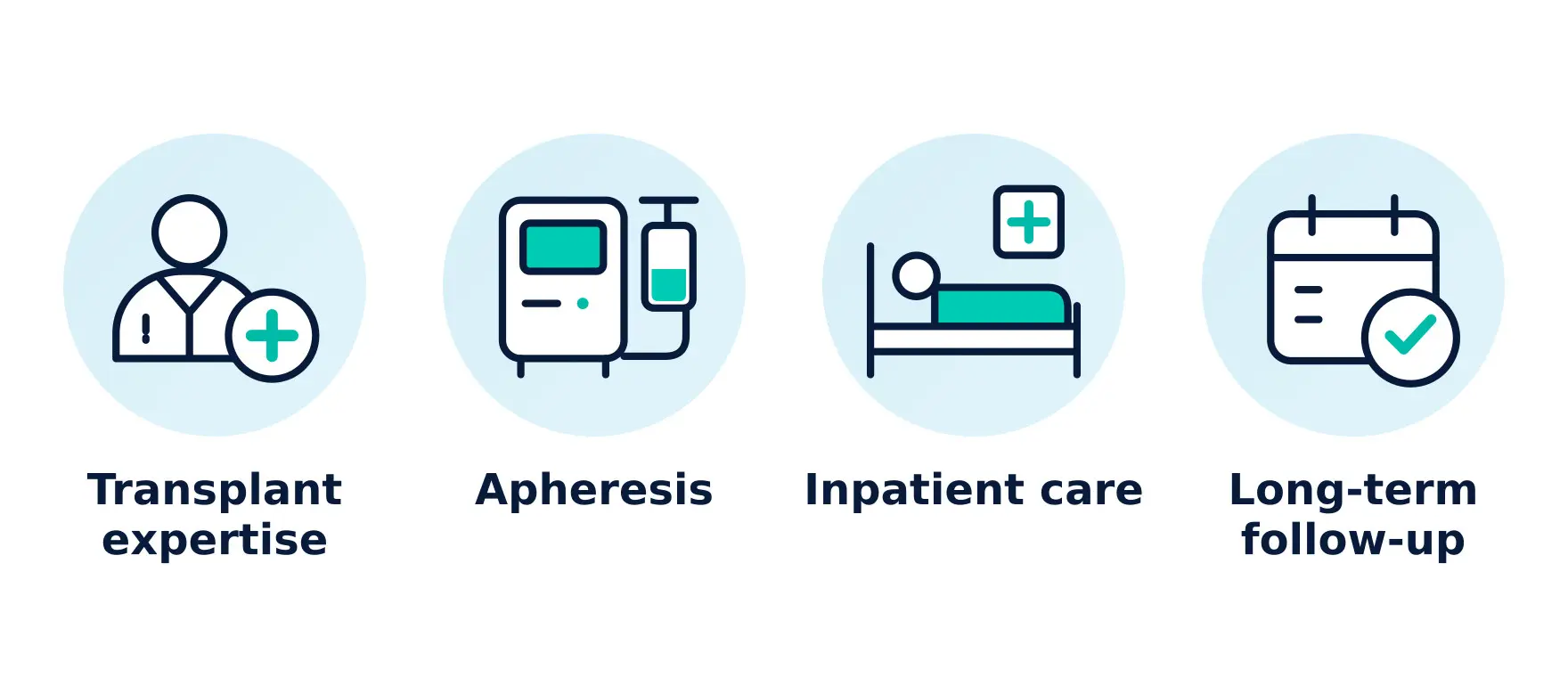
Autologous gene therapy requires much more than the availability of a manufactured cell product. It depends on experienced hematologists and transplant physicians, carefully managed conditioning and engraftment, specialized inpatient care, and coordinated long-term follow-up.
Built on transplantation expertise
Nouvogenes seeks relationships with hospitals that can safely integrate the complex clinical components of RM-001 into a multidisciplinary transplant service. Treatment centers would be responsible for patient evaluation, collection planning, conditioning, cell infusion, inpatient monitoring, complication management, and follow-up according to approved requirements.
We also welcome discussions with institutions that aspire to establish these capabilities and are prepared to pursue a structured readiness-development pathway.
Partnership principles
Clinically led: qualified transplant teams and independent medical judgment.
Quality focused: validated procedures, training, documentation, and oversight.
Integrated: coordinated hospital, manufacturing, logistics, and follow-up activities.
Progressive: readiness assessment before any clinical or commercial implementation.
Treatment-center readiness
What a qualified treatment center needs
The following domains describe the capabilities Nouvogenes would evaluate with potential partners. They are not a substitute for formal site qualification, accreditation, the approved protocol, or regulatory requirements.
01 · Clinical leadership
Experienced transplantation team
Hematologists and transplant physicians with relevant hematopoietic stem-cell transplantation experience, supported by trained nursing, pharmacy, infectious disease, transfusion medicine, and critical-care services.
02 · Patient evaluation
Multidisciplinary eligibility review
Protocol-based clinical assessment, organ-function evaluation, risk counseling, fertility and reproductive-health discussions where appropriate, and informed consent processes.
03 · Cell collection
Apheresis and cell handling
Ability to coordinate mobilization and apheresis, collection documentation, chain of identity and custody, temperature-controlled transfer, and communication with the manufacturing team.
04 · Transplant environment
Protective inpatient care
Appropriate protective isolation facilities, including positive-pressure rooms where required by institutional standards, infection prevention, transfusion support, and emergency response capability.
05 · Treatment delivery
Conditioning, infusion, and engraftment
Competence in conditioning chemotherapy, cell-product receipt and verification, infusion procedures, management of cytopenias and complications, and monitoring through hematologic recovery.
06 · Long-term care
Follow-up and safety surveillance
Capacity to track transfusion outcomes, hemoglobin response, adverse events, and protocol-required long-term follow-up, with reliable communication to referring clinicians.
Two potential pathways
Partnering with established and aspiring transplant centers
Not every interested hospital begins from the same level of infrastructure or clinical experience. We envisage a tailored assessment and development process.
Established transplantation hospitals
For hospitals already delivering hematopoietic stem-cell transplantation, discussions can focus on RM-001-specific training, apheresis-to-manufacturing coordination, product handling, clinical procedures, documentation, and site qualification.
Existing BMT capability is a strong starting point, but it does not automatically establish eligibility to deliver an investigational gene therapy.
Aspiring treatment centers
Hospitals seeking to develop or expand transplant services may explore a longer-term readiness pathway covering infrastructure gaps, clinical staffing, training, standard operating procedures, quality systems, and external institutional approvals.
Nouvogenes may help structure discussions and connect relevant expertise; the hospital remains responsible for its own clinical services, licensing, investment, and institutional governance.
Operating model
Coordinating care, manufacturing, and clinical accountability
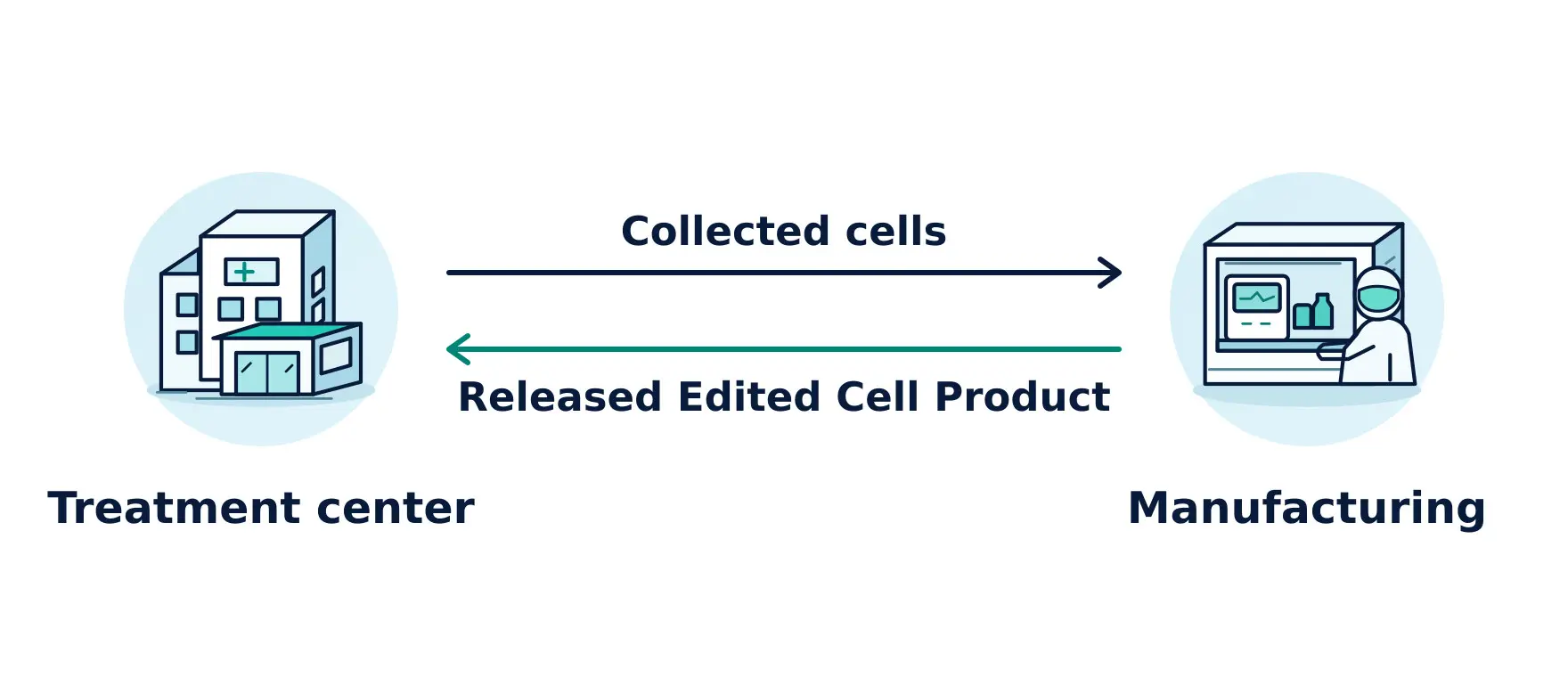
Successful autologous gene therapy requires carefully sequenced work across organizations, with responsibilities agreed before patient treatment.
01 · Evaluate
Institutional readiness review
Assess clinical capabilities, personnel, infrastructure, quality systems, expected patient pathways, and regulatory prerequisites.
02 · Plan
Clinical and operational alignment
Define roles for eligibility assessment, apheresis, scheduling, manufacturing interfaces, product receipt, conditioning, infusion, and follow-up.
03 · Prepare
Training and quality readiness
Develop site-specific procedures, training plans, documentation, escalation pathways, and readiness checks consistent with applicable requirements.
04 · Coordinate
Manufacturing and logistics interface
Align patient-specific collection, GMP manufacturing, quality release, cryogenic transport, chain of identity, and treatment scheduling.
05 · Deliver
Specialist patient management
Qualified hospital teams manage conditioning, infusion, transplant complications, and inpatient recovery under the authorized care framework.
06 · Follow up
Long-term outcome monitoring
Coordinate scheduled assessments, safety reporting, clinical outcomes, and ongoing care with referring hospitals and hematology teams.
Shared responsibilities
A partnership model with clear clinical boundaries
Nouvogenes' role is to support the development and coordination of a treatment network. The hospital retains responsibility for medical decisions, patient care, and institutional compliance.
Potential Nouvogenes contributions
Scientific and product education; RM-001-specific clinical-operational coordination; manufacturing and logistics interfaces; proposed training and quality-alignment activities; and collaboration on future treatment-center network planning.
Any support would be defined in a written agreement, subject to regulatory permissions and the parties' respective capabilities.
Hospital responsibilities
Credentialed medical personnel; appropriate clinical facilities; independent eligibility and treatment decisions; patient consent and privacy; local licenses and approvals; management of complications; and required reporting and follow-up.
Commercial terms, reimbursement, and patient funding pathways—where relevant—would be addressed separately and transparently. No access or payment outcome is guaranteed.
Become a treatment-center partner
Begin with a clinical and institutional conversation
We welcome inquiries from hospital leadership, hematology departments, transplantation programs, and institutions planning to build advanced cell and gene therapy capabilities.
A productive first discussion
We would seek to understand your current transplant and apheresis services, protective isolation capacity, specialist staffing, quality systems, patient population, and institutional goals. Together, we can determine whether an initial readiness review or a longer-term capability-building discussion is appropriate.
Interested in collaborating?
Contact Nouvogenes to explore potential treatment-center partnership opportunities. Expressions of interest are exploratory and do not imply designation, authorization, or availability of RM-001 treatment.
Partnerships
Building the infrastructure for responsible gene therapy access
Our ambition is to work with capable hospitals to translate scientific innovation into coordinated, high-quality clinical care—when supported by the necessary evidence, approvals, and operational readiness.